Butterscotch Haystacks
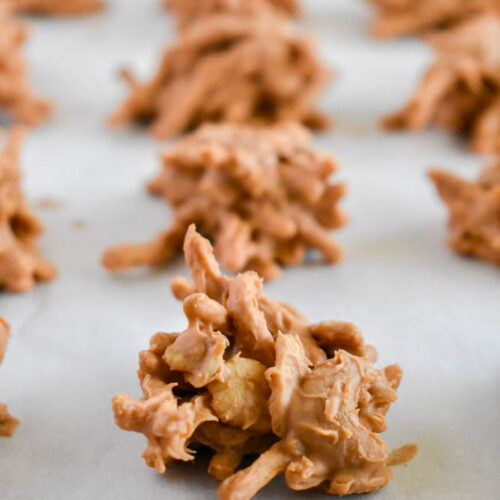
My husband and I both grew up eating butterscotch haystacks, especially around the fall holidays, but I love making them year-round. These easy no-bake treats are made with crunchy chow mein noodles coated in melted butterscotch chips for a simple salty sweet combination.
Haystacks come together in just minutes with a handful of ingredients, making them perfect for holiday platters, potlucks, or a quick dessert to share. If you grew up with this classic treat too, I hope this recipe brings back a little nostalgia.
Butterscotch Haystack Recipe Notes
Below you will find tips and tricks to help achieve the best results possible!
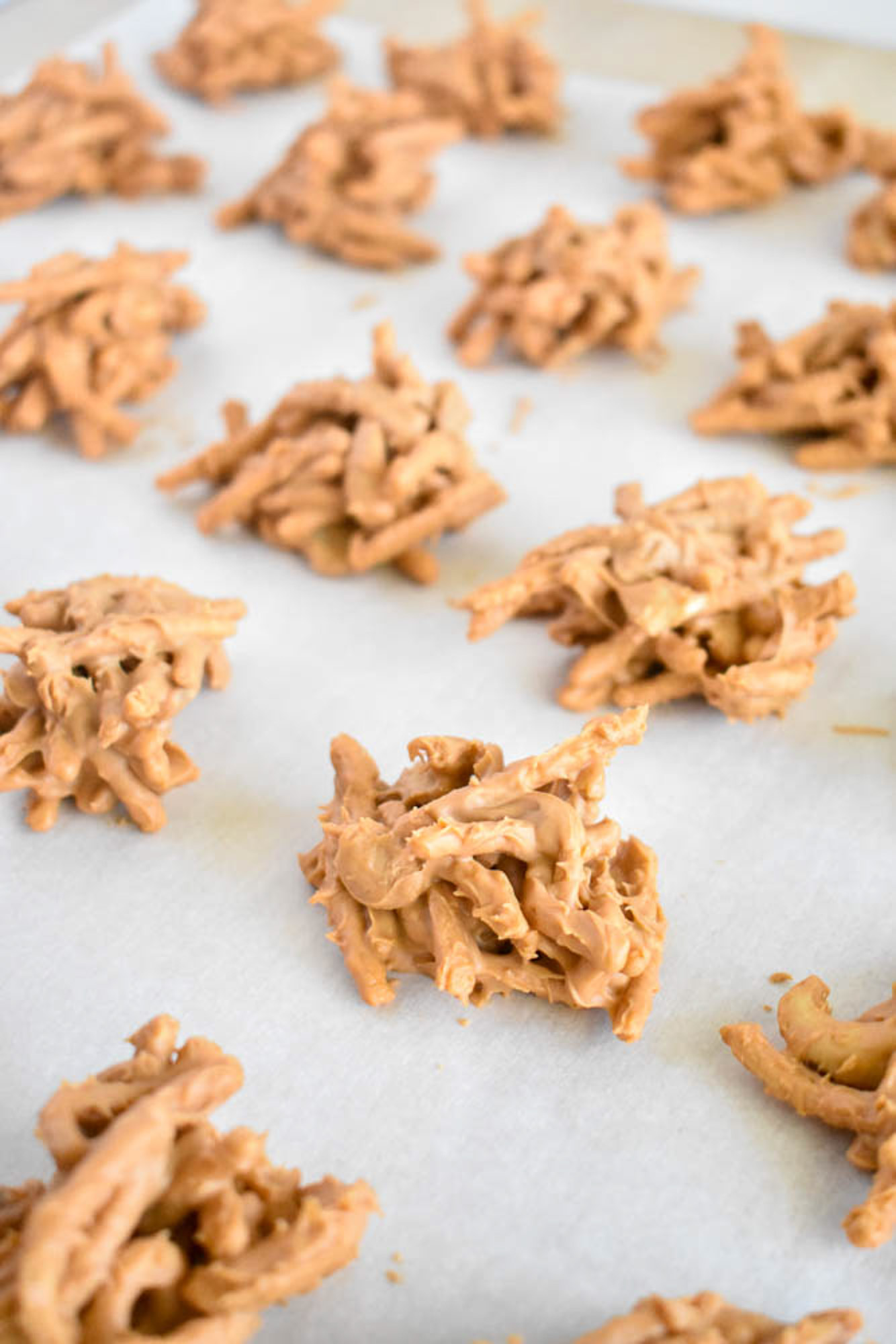
What Do Butterscotch Haystacks Taste Like?
To me, butterscotch haystacks are the perfect mix of sweet, salty, and crunchy. The butterscotch chips melt down and coat everything, while the chow mein noodles give them that light, crispy crunch. I usually use cashews, which add just enough saltiness to balance the sweetness without taking over. If you like treats with a good crunch and that sweet and salty combo, this one really hits the spot.
What I Love About This Butterscotch Haystacks Recipe
What I love most about this recipe is how easy it is. It uses just a few simple ingredients, but the flavor always comes through. It’s one of those nostalgic treats that reminds me of family gatherings, yet it’s quick enough to make anytime a craving hits. I also like how this haystack recipe is flexible. Once you know the base, you can switch things up and make it your own without much effort.
Ingredients
Butterscotch chips – These baking chips used to come in 12-ounce bags, but most brands are now closer to 11 ounces. That change doesn’t affect the recipe as it still works perfectly. You can also experiment with other baking chips if you want to change the flavor (see variations below).
Chow Mein noodles – These are dry, crunchy noodles usually found in the international aisle, often sold in bags or jars. I always use fresh chow mein noodles for this recipe, since stale noodles lose their crispness and affect the final texture.
Cashews – Cashews are my favorite nut for haystacks because they’re mild and slightly salty, which pairs well with the butterscotch. Since they can be pricey, I often purchase a bag or two at the local Dollar Tree so that I don’t have to purchase a large quantity.
Supplies Needed
Parchment paper – I line my baking sheet or counter with parchment so the haystacks don’t stick and cleanup is easy.
Large microwave safe mixing bowl – I always use a big bowl so the butterscotch and noodles have room to mix without spilling.
Large spoon for mixing – This helps coat all the noodles evenly with butterscotch without making a mess.
Teaspoons for dropping – I use teaspoons to portion the haystacks so they’re all roughly the same size and set properly.
Tips and Tricks
Work quickly: Once you start dropping the butterscotch haystacks, the butterscotch will begin to cool and thicken. If it starts to feel dry, I pop the bowl back in the microwave for 20–30 seconds, give it a good stir, and keep going.
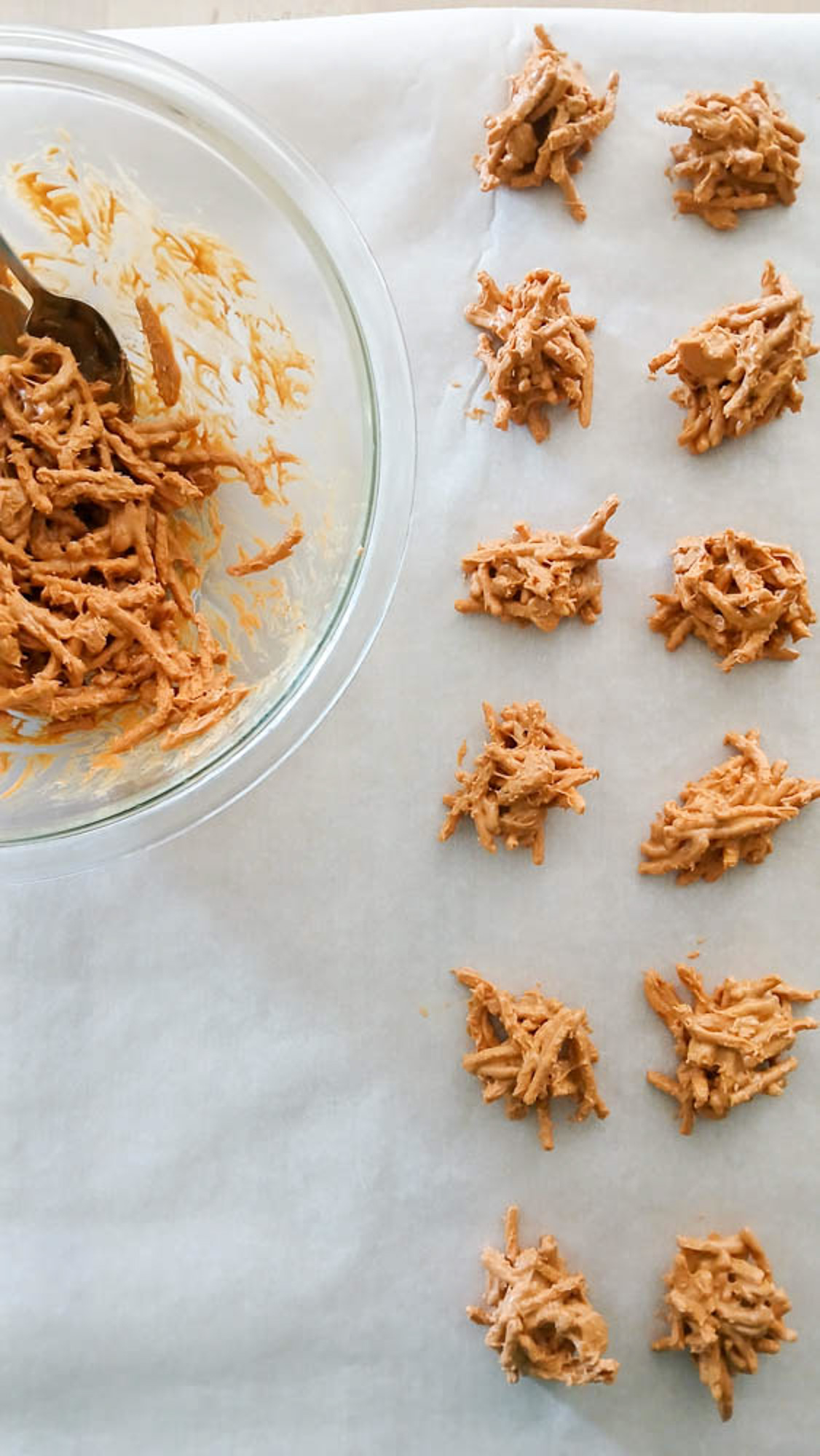
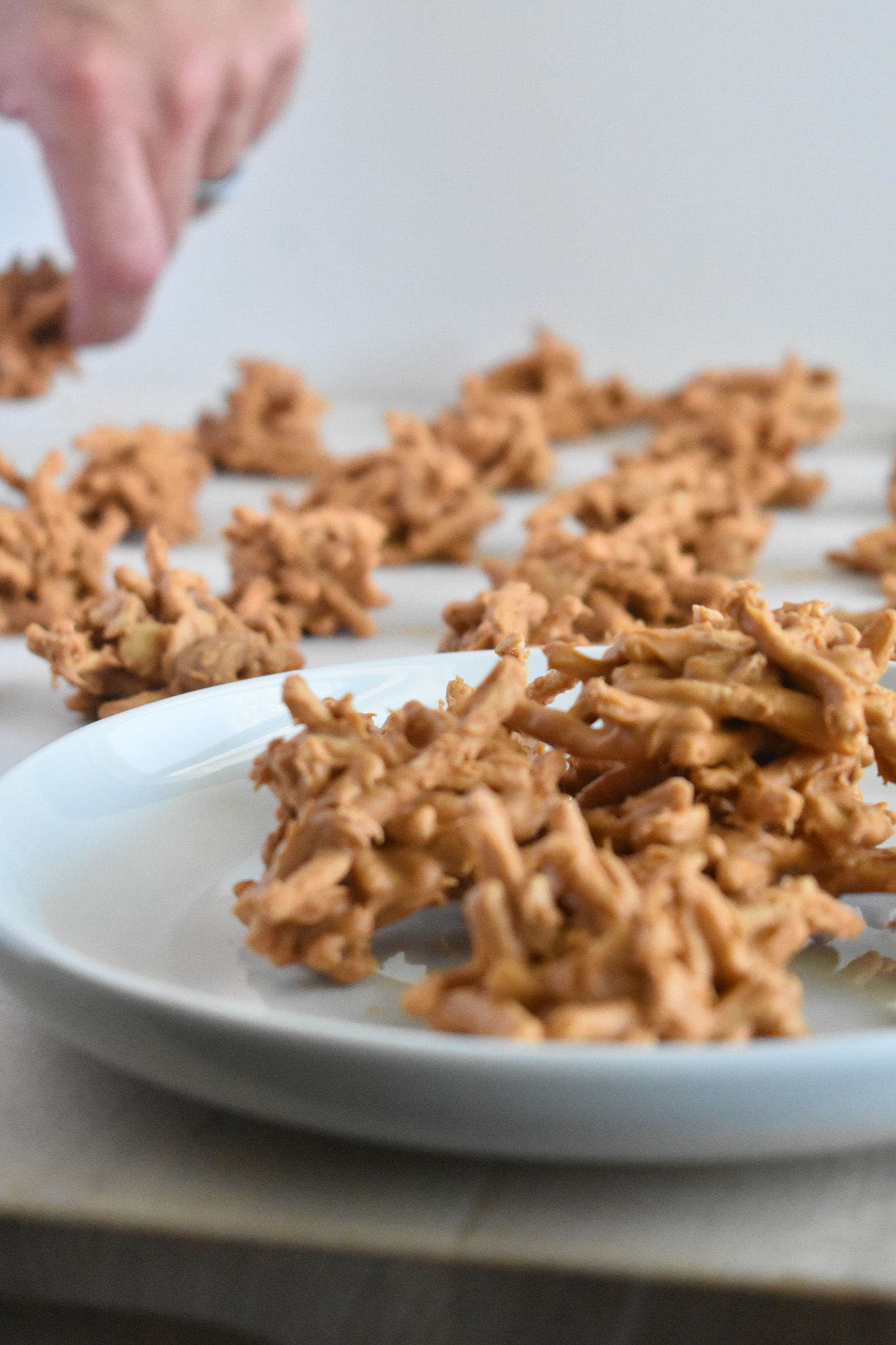
Keep them small: I drop spoonfuls about the size of a golf ball. The butterscotch is rich, and smaller haystacks make the perfect bite.
Double the batch: This recipe doubles easily as long as you have a big enough bowl. I also like making multiple batches with different variations so there’s something for everyone.
Variations
Change the coating: You can swap the butterscotch chips for chocolate, white chocolate, or peanut butter chips. Mixing chips works too. Half chocolate and half peanut butter or half butterscotch and half white chocolate are both great options.
Add peanut butter: I usually make these without peanut butter, but if you like it, melt ½ cup creamy peanut butter with 11 ounces of baking chips.
Switch up the crunch: Chow mein noodles are classic, but cornflakes or shoestring potato sticks (the canned kind) work just as well.
Try different nuts: Peanuts, honey-roasted peanuts, almonds, or pecans all make good substitutes for cashews.
Add extra mix-ins: Mini marshmallows or pretzel pieces are fun additions. I keep total mix-ins between ½ and ¾ cup so everything stays well coated. If the mixture feels too soft, a short chill in the fridge helps them set up.
Butterscotch Haystack FAQs
Can I use a different nut or skip nuts entirely?
Absolutely! I usually use cashews, but peanuts, almonds, or pecans all work well. If you want nut-free haystacks, you can skip them. They are still delicious with just the noodles and butterscotch.
My haystacks are too soft, what should I do?
If your mixture feels too soft when forming the mounds, I’ll usually pop the bowl in the fridge for a few minutes to firm it up. The key is not to make them too big as smaller haystacks set faster and hold their shape better.
How should I store no-bake haystacks?
I keep mine in an airtight container at room temperature for up to a week. If it’s really warm in your kitchen, I’ll store them in the fridge for a few extra days and they stay just as crunchy once they come back to room temperature.
Can I freeze haystacks?
Yes! I freeze my butterscotch haystacks in a sealed container for up to 2 months. When I’m ready to eat them, I let them sit at room temperature for a few minutes before serving. The only thing to watch out for is condensation because sometimes the butterscotch softens a bit from the moisture. I just let them sit on the counter for a little while, and they firm right back up.
Butterscotch Haystacks
Equipment
- Parchment paper
- Large microwave-safe mixing bowl
- Large spoon for mixing
- Teaspoons for dropping
Ingredients
- 11 ounces of butterscotch baking chips | 312g
- 5 ounce can of chow mein noodles | 141g
- 1/2 cup of chopped cashews | 2.5 ounce | 70g
Instructions
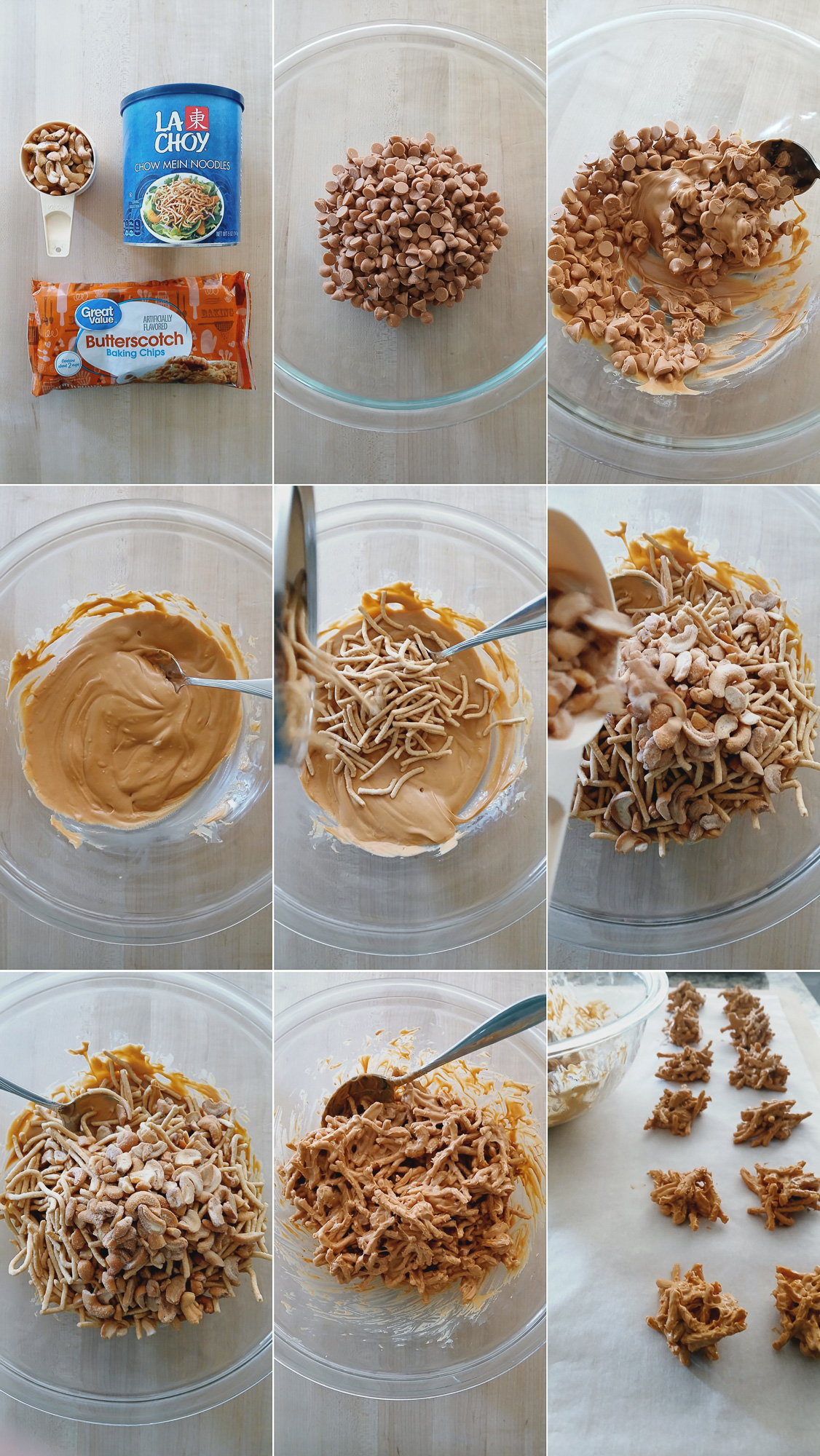
- Prepare your workspace: Line your countertop or baking sheet with parchment paper to prevent sticking.
- Melt the butterscotch chips: In a large microwave-safe bowl, melt the butterscotch baking chips in 30-second intervals, stirring between each, until smooth. Be careful not to overheat or burn the chocolate. You can also melt the butterscotch using a double boiler if you prefer.11 ounces of butterscotch baking chips | 312g
- Coat the noodles and nuts: Add the chow mein noodles and chopped cashews to the melted butterscotch. Gently stir or fold the mixture to evenly coat the noodles, being careful not to break them too much.5 ounce can of chow mein noodles | 141g1/2 cup of chopped cashews | 2.5 ounce | 70g
- Form the haystacks: Drop a spoonful of the mixture onto the parchment paper. Use the spoon to shape them, if needed, into small mounds resembling haystacks.
- Let them set: Allow the haystacks to harden at room temperature, or place them in the refrigerator for faster setting.
- Store and serve: Once set, transfer the haystacks to an airtight container. They can be stored at room temperature, but we prefer keeping them in the fridge for a firmer, chilled texture.
Did you try this recipe?
Share your experience in the comments below!
I’d love to hear how it turned out
Let’s see your creations!
Share your photos
Tag me @flourtinbakes on social media